FDA certification is one of the most searched topics among Indian food exporters targeting the USA — and also one of the most misunderstood. There is no single "FDA certificate" for food exports. What US buyers actually evaluate is a combination of facility registration, product compliance, labeling, and documentation. This guide explains what you actually need, step by step.
What "FDA Certification" Actually Means for Food Exporters
The US Food and Drug Administration (FDA) does not issue an "export certificate" to food manufacturers. When Indian exporters or buyers refer to "FDA certification", they typically mean one or more of the following:
- FDA Facility Registration: All food manufacturing facilities that export to the USA must register with the FDA under the Bioterrorism Act (Section 415). This is mandatory and must be renewed every two years (in odd-numbered years).
- Prior Notice: The FDA must be notified before every food shipment arrives in the USA. This is submitted electronically through the FDA's Prior Notice System Interface (PNSI).
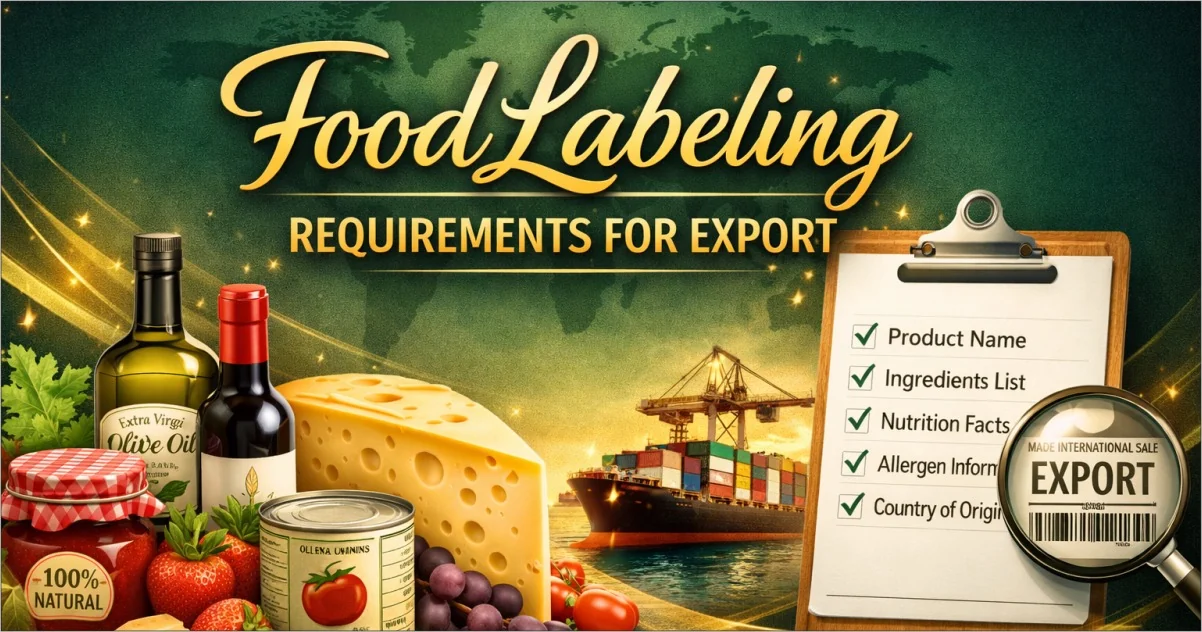
- US-Compliant Labeling: Products must carry Nutrition Facts panels, allergen declarations, ingredient lists, and net weight in US customary units — not metric alone.
- FSMA Compliance: The Food Safety Modernization Act (FSMA) requires exporters to meet US food safety standards. Foreign suppliers may be subject to FSVP (Foreign Supplier Verification Program) oversight by the US importer.
Step-by-Step: Getting FDA-Ready as an Indian Food Exporter
Register Your Facility with the FDA
Go to the FDA's Food Facility Registration portal (FDA.gov). Registration is free. You'll need your facility address, product categories, and a US Agent (a person or company based in the USA who can receive communications from the FDA on your behalf).
Appoint a US Agent
A US Agent is legally required for all foreign food facilities registered with the FDA. This can be a US-based individual, law firm, or regulatory consulting company. They are your FDA point of contact.
Update Your Product Labels for the US Market
US labeling requirements differ significantly from Indian FSSAI labeling. Key differences include: Nutrition Facts (not Nutritional Information) format, allergen declarations using FDA-specific allergen list, net weight in ounces/pounds, and English-only labeling for most product types.
Obtain Required Certifications
Depending on your product category: APEDA registration (for agricultural exports), phytosanitary certificates (for plant-based products), health certificates from FSSAI or state authority, Halal/Organic certification if making those claims.
Set Up Prior Notice for Each Shipment
Before each shipment, submit Prior Notice to the FDA at least 4 hours before arrival by sea (or 2 hours by air). This can be done by your US customs broker.
US Labeling Requirements: What Must Change from Your Indian Labels
| Label Element | Indian (FSSAI) Standard | US (FDA) Requirement |
|---|---|---|
| Nutrition panel title | "Nutritional Information" | "Nutrition Facts" (specific format) |
| Serving size | Per 100g typically | Based on RACC (Reference Amount Customarily Consumed) |
| Allergen declaration | FSSAI allergen list | FDA's 9 major allergens (includes sesame from 2023) |
| Net weight | Grams / ml | Must include oz / fl oz (metric can be secondary) |
| Address | Indian manufacturer address | US distributor or importer address required |
| Country of origin | Required | Required — "Product of India" |
A single labeling error — like missing a sesame allergen declaration or using the wrong Nutrition Facts format — can result in FDA detention of your shipment. Get a professional label review done before your first US export. Copago's compliance team provides label checks for the US and other markets.
What US Buyers Will Verify Before Placing an Order
When a US food importer or buyer evaluates your product, they will typically request or verify:
- FDA Facility Registration number (can be verified on FDA.gov)
- US-format product labels (or label artwork for review)
- Product specifications and Certificate of Analysis (CoA)
- Allergen and GMO statement
- Shelf life and storage requirements
- FSSAI Export Licence
- Health certificate from APEDA or state authority
- Insurance and packaging standards
Having all of these ready before you start outreach significantly increases your conversion rate. A buyer who asks for these and gets a quick, complete response is far more likely to progress to a sample order.
Common Mistakes Indian Exporters Make with FDA Compliance
- Registering the facility but forgetting biennial renewal — registrations expire in even-numbered years and must be renewed Oct–Dec of odd-numbered years
- No US Agent appointed — legally required; shipments without a US Agent can be detained
- Sesame not declared as an allergen — sesame became the 9th major FDA allergen in January 2023; many Indian exporters still miss this
- Using Indian Nutrition Information format — the FDA's Nutrition Facts format has specific field order, font sizes, and percentage daily value references
- Missing Prior Notice — every shipment requires Prior Notice; missing it can result in the shipment being held at port
How Copago Supports US Market Compliance
Copago's export compliance services help Indian food brands prepare for US market entry including label compliance review, documentation checklist, and guidance on FDA facility registration. Combined with CoTrade buyer discovery and direct marketing campaigns to verified US importers, Copago provides an end-to-end system for US market entry.
Conclusion
FDA compliance is not a single certificate — it's a combination of facility registration, labeling readiness, documentation, and per-shipment compliance. Getting this right before you approach US buyers dramatically improves your chances of closing your first US distribution deal. Get compliant, then get in front of buyers.
Ready to Find Global Buyers for Your Food Brand?
Talk to Copago's export specialists about buyer discovery, direct marketing campaigns, and compliance support — all in one place.