Export lead generation for food products is not about volume — it's about finding the right buyer, at the right time, with the right message. This guide gives you a practical framework to generate better quality export leads through structured buyer discovery, direct outreach, and smarter qualification.
Why Traditional Export Lead Generation Fails
Most Indian food exporters rely on one or more of these channels for lead generation:
- Trade exhibitions (Gulfood, SIAL, Anuga, World Food Moscow)
- IndiaMART, Alibaba, and B2B portals
- APEDA buyer-seller meets
- Generic email blasts to purchased databases
- Social media posts and LinkedIn outreach
Each of these can generate enquiries. The problem is that these enquiries are typically low quality, low conversion, and slow to close. Trade shows are expensive and infrequent. B2B portals attract price shoppers. Email blasts to cold lists generate sub-1% response rates.
What successful exporters have in common is a structured system that combines relevance, readiness, and direct outreach — not just activity.
The 5-Part Export Lead Generation Framework
Market Selection
Identify 2–3 target markets where your product has real demand, price competitiveness, and compliance feasibility.
Buyer Discovery
Build a focused shortlist of relevant importers and distributors for each market using structured tools — not generic directories.
Compliance Readiness
Ensure your product, labeling, and documentation meet the target market's requirements before outreach begins.
Direct Outreach
Reach your buyer shortlist with personalised, structured communication through WhatsApp and email campaigns.
Follow-Up & Qualification
Nurture responses with a consistent follow-up cadence. Qualify genuine interest from idle enquiries.
Step 1: Start with Market Selection
Lead generation without market clarity is wasted effort. Before building any buyer list, answer these questions:
- Which markets have active demand for your product category?
- Where do Indian food products have a price advantage vs. local competitors?
- Which markets can you serve with your current compliance certifications?
- Which markets have a large Indian diaspora that already knows your product type?
For most Indian food brands, the highest-priority markets in 2026 are: UAE, USA, UK, Canada, Singapore, Australia, and parts of Africa — depending on product category.
Step 2: Build a Relevant Buyer Shortlist
This is where most exporters go wrong. They either buy a generic database or search Google for "food importers in Dubai" — and end up with a mixed list of brokers, agents, and companies that haven't been active for years.
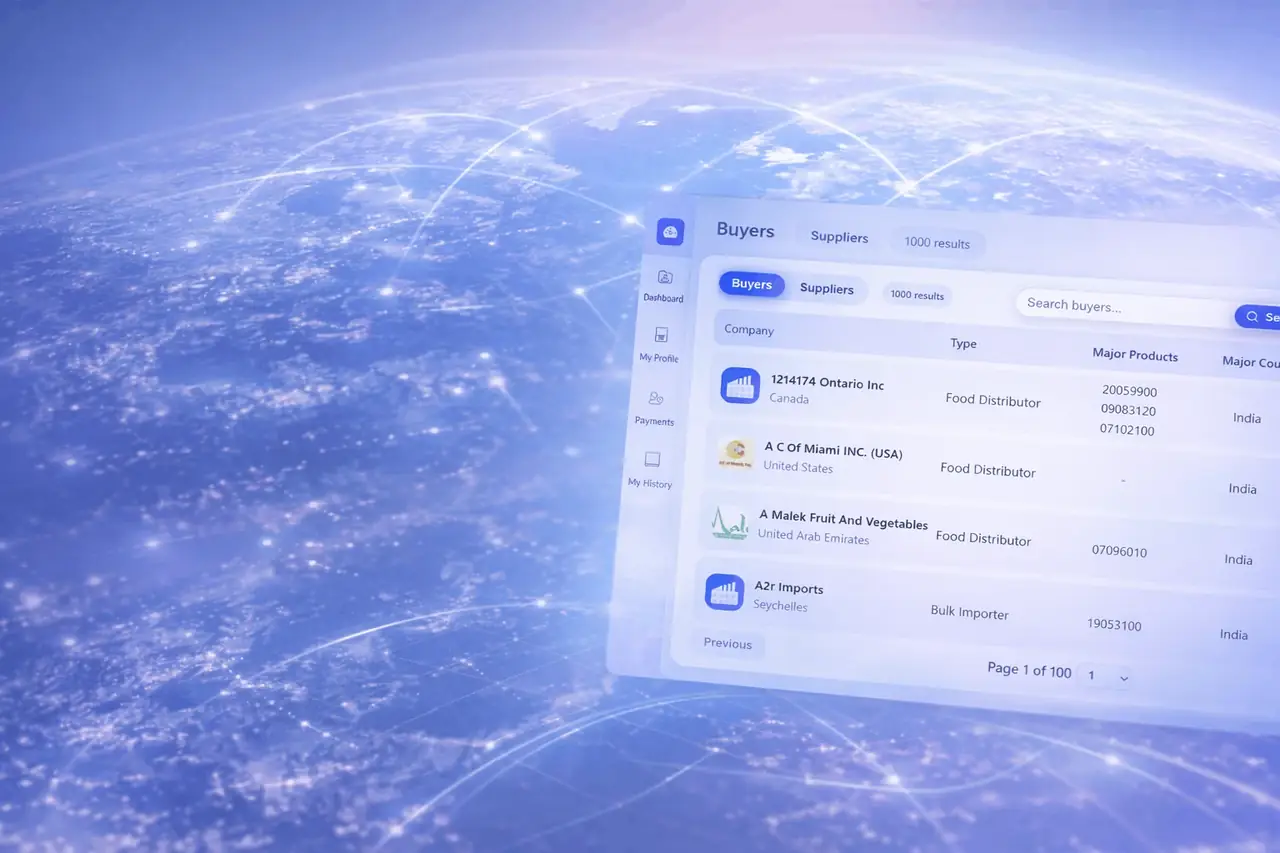
A better approach is to use CoTrade — Copago's buyer discovery platform — to search for importers and distributors by:
- Product category (spices, snacks, dairy, beverages, etc.)
- Target market (UAE, USA, UK, Germany, etc.)
- Buyer type (importer, distributor, wholesaler, retailer)
- Trade activity and market relevance
This gives you a shortlist of 30–60 buyers who are genuinely relevant to your product — dramatically improving outreach efficiency.
A well-targeted outreach campaign to 50 relevant buyers should generate 8–15 positive responses. A mass blast to 500 generic contacts typically generates 2–5 responses of poor quality. Focus wins.
Step 3: Why WhatsApp Outperforms Cold Email for Exporters
Cold email open rates in the B2B food trade hover around 15–25%. WhatsApp messages, by contrast, have open rates above 90% — and read rates above 70%.
For exporters reaching out to importers in the UAE, UK, and Southeast Asia, WhatsApp is often the primary business communication tool. A well-structured WhatsApp outreach sequence can generate faster responses than months of email follow-up.
Effective WhatsApp outreach for food exporters includes:
- A professional opening with company name and product category
- A one-line product pitch with a key differentiator
- A product image or catalogue link
- A clear call to action ("Can I share our product list?", "Would you be open to a quick call?")
Copago's direct marketing service manages WhatsApp and email campaigns to verified buyer shortlists — with professional messaging, structured follow-up, and lead tracking.
Step 4: Qualify Leads Properly
Not every response is a lead. A buyer who says "send me your catalogue" may not be actively sourcing. A buyer who asks for a sample and discusses logistics is a much warmer prospect. Use a simple qualification framework:
| Signal | Lead Quality |
|---|---|
| Requested catalogue only | Cold — nurture with follow-up |
| Asked about pricing and MOQ | Warm — schedule a call |
| Requested a sample | Hot — prioritise and follow up fast |
| Discussed payment terms | Very Hot — move to trial order discussion |
Step 5: Support Lead Generation with Compliance and Documentation Readiness
A buyer who becomes interested will quickly start evaluating your compliance posture. If your labels aren't ready for their market, or you don't have the right certifications, the lead dies.
Before your campaigns go live, ensure you have:
- FSSAI Export Licence
- Market-specific label compliance (Arabic for GCC, FDA-compliant for USA, etc.)
- Halal certification (if targeting GCC, UK, or Southeast Asia)
- APEDA / IEC registration
- Product samples ready to dispatch
- Export pricing sheet in USD
Conclusion
The best way to generate export leads for food products in 2026 is to combine smart buyer discovery, compliance readiness, direct outreach, and consistent follow-up into one structured system. The exporters who win international business aren't necessarily the ones with the best product — they're the ones with the best process.
Copago's platform — combining CoTrade, direct marketing campaigns, and compliance support — is built to run this system for you.
Ready to Find Global Buyers for Your Food Brand?
Talk to Copago's export specialists about buyer discovery, direct marketing campaigns, and compliance support — all in one place.