Most Indian food exporters don't fail because their products are bad. They fail because their export process is broken — or doesn't exist. The difference between exporters who consistently find international buyers and those who don't is rarely product quality. It's almost always about system quality.
The Hard Truth About Export Failure
Surveys of Indian food exporters consistently show that over 70% of SME exporters who attempt to enter international markets struggle to close even their first distributor agreement within 12 months of trying. The reasons are rarely about product quality. They're almost always about process.
Here are the five most common mistakes — and what better exporters do instead.
Mistake 1: Chasing Volume Instead of Relevance
Many exporters believe that the more buyers they contact, the better their chances. So they buy a database of 2,000 importers across 40 countries and start sending mass emails. The result? Near-zero responses, wasted months, and a team that loses faith in the process.
The problem is not effort — it's targeting. A US snack buyer and a German spice importer are not the same person. Sending them the same message signals that you don't understand their business.
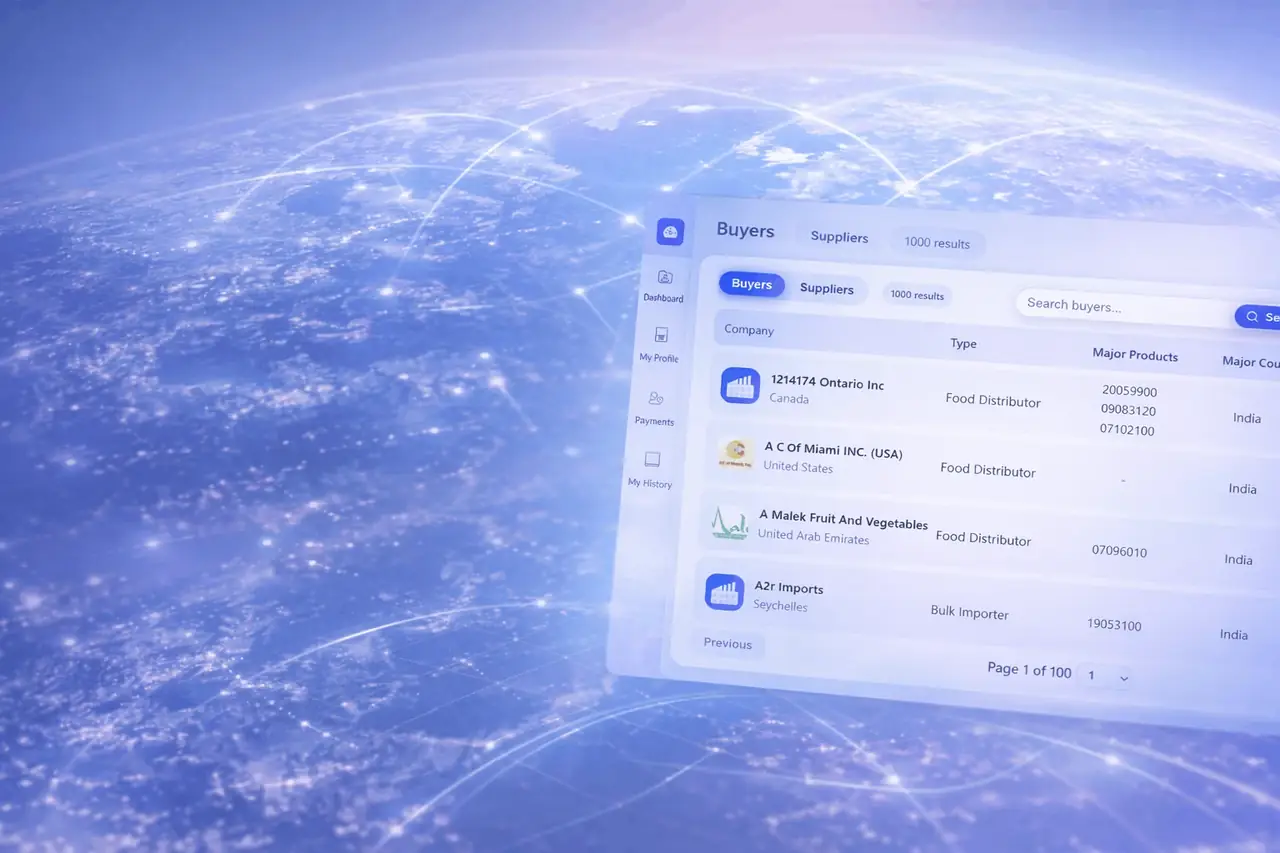
What works instead: Build a shortlist of 30–50 buyers who are genuinely relevant to your product category, price point, and target channel. Use a structured discovery tool like CoTrade to filter by market, category, and buyer type before your first outreach.
A relevant list of 40 buyers with personalised outreach will outperform a generic list of 2,000 every single time. Quality of targeting is more important than volume of contacts.
Mistake 2: Relying Only on Passive Channels
Exhibitions, trade portals, IndiaMART listings, and social media posts are passive channels. They create occasional inbound enquiries — but the volume is low, the quality is inconsistent, and the wait is long.
Many exporters spend ₹5–10 lakh on an exhibition stand at Gulfood or SIAL and come back with 200 business cards — but no closed deals because they had no structured follow-up system.
What works instead: Combine exhibitions and portals with proactive, direct outreach. WhatsApp and email campaigns to verified buyers — run with professional messaging and a proper follow-up cadence — consistently outperform passive channels. Copago's direct marketing campaigns are built specifically for this.
Mistake 3: Poor Market Readiness Before Outreach
This is perhaps the most damaging mistake. An exporter generates genuine buyer interest, gets on a call with a UAE distributor — and then can't answer basic questions about labeling compliance, MOQ, shelf life, or pricing in USD. The buyer moves on.
Export readiness is not just about having a good product. It includes:
- Export-compliant labeling for your target market (Arabic for UAE, English for USA, etc.)
- Valid FSSAI export licence and relevant certifications (Halal, Organic, etc.)
- Product pricing in USD or local currency with clear incoterms (FOB/CIF)
- Professional product catalogue with high-resolution images
- Clear MOQ and payment terms defined upfront
- FDA registration if targeting the USA
Many exporters assume they can "figure out compliance later" once they have a buyer interested. In reality, most international buyers will not invest time in a supplier who isn't already compliant. Get ready before you reach out.
Mistake 4: No Follow-Up System
International buyers are busy. A positive first response doesn't mean a deal is imminent. Most export deals close after 4 to 8 follow-up touchpoints. Yet the majority of exporters follow up once — maybe twice — and then give up.
A good follow-up system looks like this:
Day 0: Initial Outreach
Send your company profile, product catalogue, and compliance credentials via WhatsApp or email.
Day 3–5: Follow-Up 1
Reference the initial message. Ask if they'd like samples or a Zoom call to discuss further.
Day 10: Follow-Up 2
Share a relevant piece of content — a new product, a market insight, or a case study.
Day 20+: Long-Term Nurture
Keep the relationship warm with periodic updates. Buyers who aren't ready now may be ready in 3–6 months.
Mistake 5: Treating Every Market the Same
A product that sells well in the Indian diaspora market in the UK may not work in mainstream German retail. A private label buyer in the USA has completely different requirements than a wholesale importer in Singapore.
Each market requires different positioning, different compliance, different channel strategy, and different buyer types. Exporters who treat all markets the same typically get rejected across all of them.
What works instead: Start with one or two markets where your product has a clear fit. Master those markets before expanding. Use CoTrade to understand buyer profiles and market relevance before committing resources.
What a Better Export System Looks Like
The most successful Indian food exporters follow a simple but disciplined system:
- Define target markets based on product fit and compliance readiness
- Build a focused, relevant buyer shortlist using structured discovery tools
- Prepare compliance, catalogue, and pricing before outreach
- Run direct, personalised outreach campaigns — not mass blasts
- Follow up consistently with a structured cadence
- Qualify interested buyers and convert to samples, then trial orders
This is the system Copago helps exporters build and execute — combining CoTrade buyer discovery, direct marketing campaigns, and compliance support into one coordinated export growth platform.
Conclusion
Export failure is not inevitable. Most of the mistakes that hold Indian food exporters back are fixable — they're process problems, not product problems. By improving targeting, building readiness before outreach, and following up consistently, Indian food brands can dramatically improve their chances of closing international buyer relationships in 2026.
Ready to Find Global Buyers for Your Food Brand?
Talk to Copago's export specialists about buyer discovery, direct marketing campaigns, and compliance support — all in one place.